Is a Food Court or Coffeeshop Halal? Navigating Shared Eating Spaces
Published 6 July 2026
Fully halal-certified food court: A food court where the entire premises is run by one operator and certified by MUIS as a single unit, so every stall and the shared seating, trays, crockery and wash points fall under one certificate. This differs from a mixed food court, where only some stalls hold their own individual certificates.
The short answer: a food court is not halal as a whole just because some stalls inside it are certified. MUIS certifies each stall as its own premises, so a mixed food court is simply a venue that happens to contain certified units. The exception is a fully halal-certified food court, where one operator runs the entire premises under a single certificate. Everywhere else, you check the specific stall, not the building.
Certification attaches to a premises, not a venue
MUIS issues its halal certificate to a premises, and in a food court that premises is usually the individual stall. Under the Eating Establishment scheme, MUIS certifies “stalls within a foodcourt or its equivalent,” which means each stall applies, is audited and is listed on its own. The food court around it is never the certified thing. A hall full of stalls is not “a halal food court” in MUIS terms; it is a shared space that may hold one, several or no certified stalls. The mechanics of how a single stall gets certified are covered in how hawker stall certification works.
What shared seating, trays and wash points mean in practice
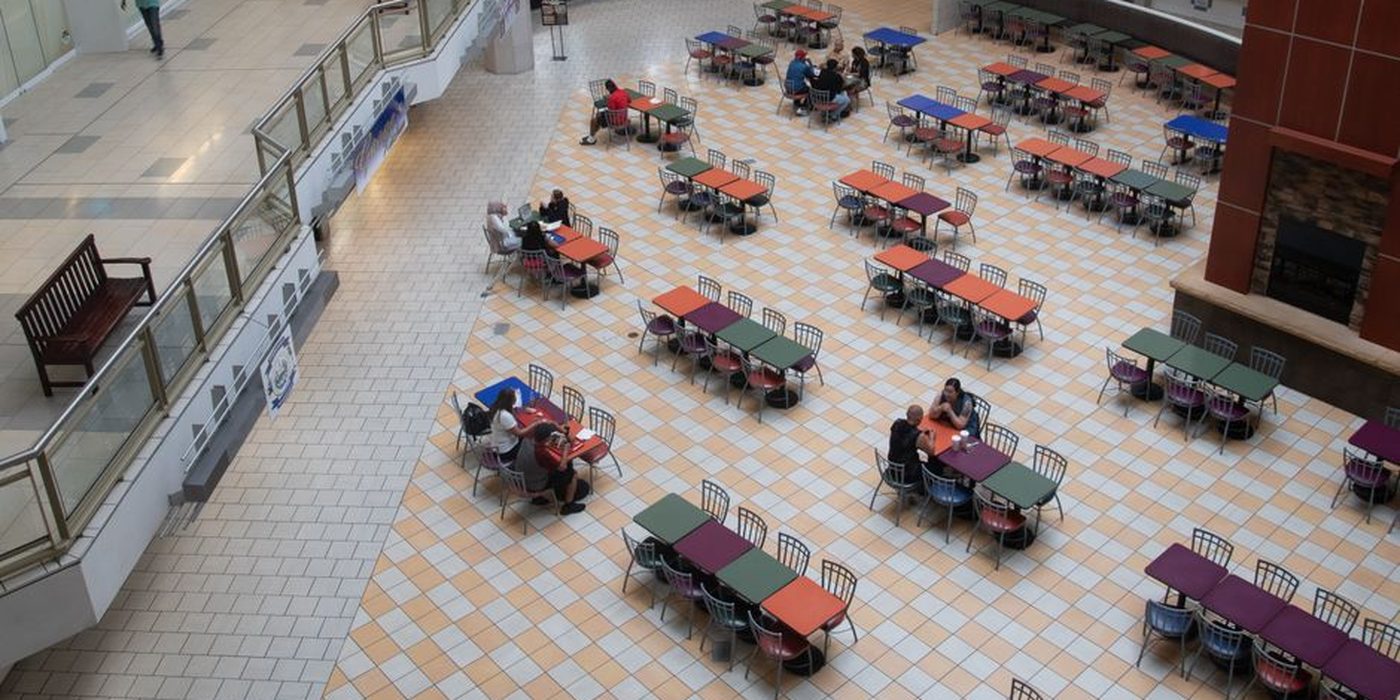
Food courts and coffeeshops are shared by design. Diners sit at common tables, trays and crockery circulate between stalls, and wash points serve everyone. In a mixed food court, these communal areas sit outside any single stall’s certificate. MUIS certification confirms that a certified stall handles, prepares and serves its food to halal requirements within its own preparation area. It does not certify the seating hall, the shared trays or the dishwashing point used by uncertified stalls too.
That gap is exactly why the shared-space question feels harder than checking a standalone restaurant. Certification answers “is this stall’s food prepared to the requirements.” How much weight you give to shared trays and communal wash-up is a separate, personal judgement that certification does not decide for you.
Fully certified food court versus a mixed one
There are two very different setups behind the words “food court.”
A fully halal-certified food court is run by one operator who certifies the entire premises as a single unit. Every stall, the kitchen areas and the shared seating, trays and wash points all fall under one certificate. Here the shared-facility question largely dissolves, because the whole premises is certified together rather than stall by stall.
A mixed food court is the common case: a venue where some individual stalls hold their own certificates and others do not. The building is not certified and cannot be. Only the specific stalls with a live listing are certified, and their status stops at their own unit. Two neighbouring stalls can differ completely, one certified and one not, under the same roof and sharing the same trays.
How to identify which stalls are certified
Treat every stall as its own case. Look for a MUIS certificate displayed at the stall itself, then confirm it rather than trusting the display. Match the certificate number and the stall’s unit against the MUIS Halal e-Service register. Newer digital certificates carry a QR code that scans straight to the same official record, which is the cleanest check at the stall.
A certificate, sticker or QR code belongs only to the stall showing it. A shared signboard, a common food-court brand, or simply sitting in the same hall never transfers certification from one unit to another. If a stall has no live entry within its validity dates, treat it as uncertified. The full method, field by field, is in how to check halal certification in Singapore.
Browse certified stalls instead of guessing
This directory is an independent, English-language guide rebuilt from the MUIS public register, so you can browse certified stalls by name rather than read certificates one at a time in a food court. It is not MUIS and does not replace verification; the register is always the final word. To see the certified stalls we track, start at the hawker category hub, and confirm any stall’s live status on the MUIS register before you rely on it.
Frequently asked questions
Is a whole food court halal just because some stalls are certified?
No. MUIS certifies each stall as its own premises, so a food court with certified stalls is not itself halal as a whole. The venue simply contains certified units alongside uncertified ones. Unless the entire food court is run and certified as a single premises, you check the specific stall you are buying from, not the building.
What do shared seating, trays and crockery mean in a mixed food court?
In a mixed food court, seating, trays, crockery and wash points are shared by all stalls, certified or not. MUIS certification attaches to the certified stall and its own preparation area, not the communal hall. How you weigh shared facilities is a personal judgement, and a fully certified food court removes that question because the whole premises is under one certificate.
How do I tell which stalls in a food court are certified?
Look for a MUIS certificate displayed at the individual stall, then match its certificate number and unit against the MUIS Halal e-Service register. A certificate belongs only to the stall showing it, never to its neighbours. If a stall has no live listing, treat it as uncertified whatever a sticker, signboard or colour scheme suggests.
What is the difference between a fully certified and a mixed food court?
A fully certified food court is run by one operator and certified as a single premises, so every stall and the shared facilities sit under one certificate. A mixed food court contains individually certified stalls next to uncertified ones. In the mixed case, certification never covers the venue, only the specific stalls that hold their own certificate.