MUIS Halal Certification Schemes Explained
Published 5 July 2026
MUIS certification scheme: The category under which MUIS certifies a premises. The public establishments register shows two schemes: Eating Establishment (places that serve food to consumers, such as restaurants, hawker stalls and bakeries) and Food Preparation Area (premises that prepare food for supply, such as central kitchens and caterers). Each scheme is divided into sub-schemes that describe the type of premises.
The MUIS public register labels every certified premises with a scheme and a sub-scheme. The scheme says what kind of operation was certified; the sub-scheme says what kind of premises it is. Understanding the two makes the register much easier to read.
The two schemes in the establishments register
Eating Establishment covers premises that serve food directly to consumers. This is the scheme behind most of the register: restaurants, hawker stalls, snack bars, bakeries, food kiosks, canteens and short-term bazaar stalls. Browse them all under categories.
Food Preparation Area covers premises that prepare food for supply rather than direct walk-in dining. The two big sub-schemes here are central kitchens and caterers. If you order catering for an event, this is the part of the register to check.
MUIS also runs other certification schemes (for example for products and endorsement of imported goods) that do not appear in the establishments register; this directory covers establishments only.
The sub-schemes you will see
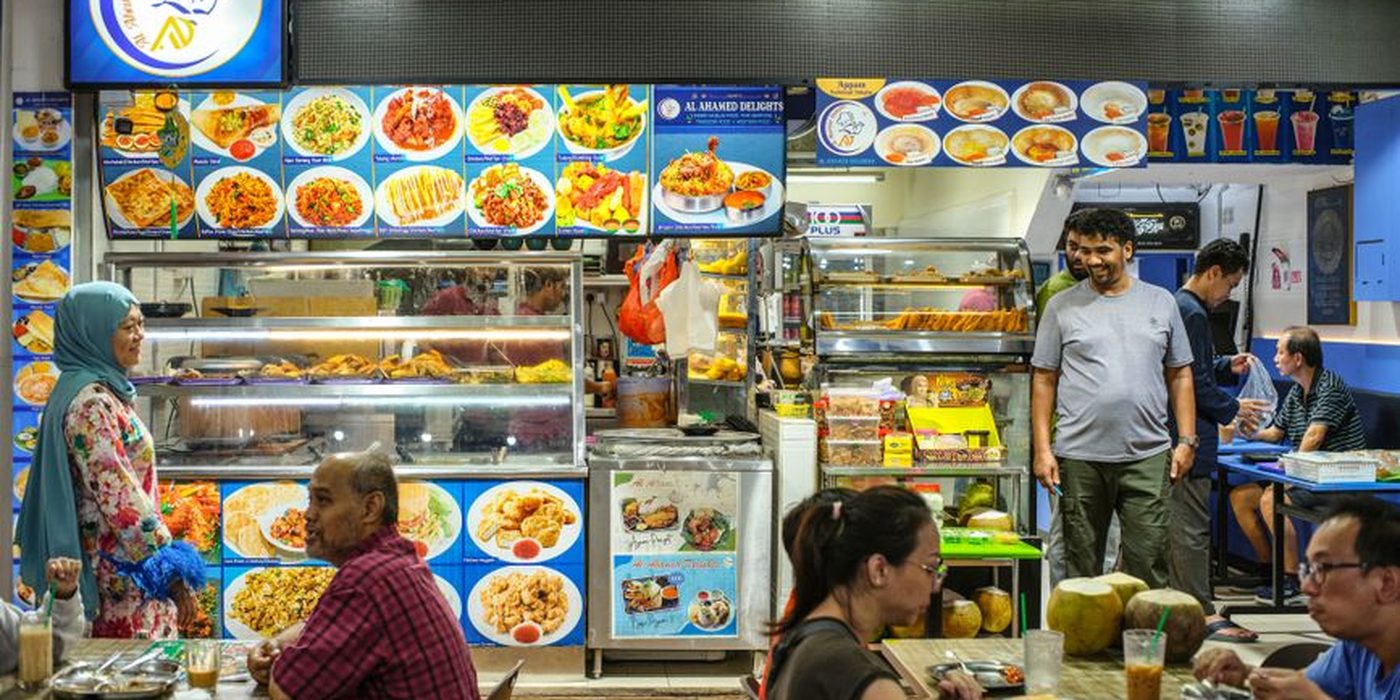
- Hawker - stalls in hawker centres, coffeeshops and food courts. The certificate belongs to the stall, not the whole centre.
- Restaurant - full eating establishments, from casual chains to hotels’ outlets.
- Snack Bar / Bakery - bakeries, dessert shops, drink stalls and snack counters.
- Central Kitchen - kitchens that prepare food for distribution to other outlets or channels.
- Catering Company - event and institutional caterers.
- Staff Canteen / Canteen - workplace and institutional canteens, often inside offices, factories or camps.
- Food Station / Food Kiosk - counters and kiosks inside larger venues.
- Halal Section - a certified halal section within a larger premises, such as a supermarket counter.
- Short Term Stall - temporary premises like bazaar and roadshow stalls, certified for a limited run.
Why the distinction matters when you verify
Certification is issued per premises under one of these sub-schemes. That has two practical consequences. First, a brand can hold different certificates for different premises types (its restaurant, its central kitchen and its catering arm are separate entries). Second, when you verify an outlet, the register entry you match should be the same premises type you are standing in. A certificate for a company’s central kitchen is not the same thing as certification of its walk-in cafe.
To check a specific outlet now, use the search page or start from halal food by area.
Frequently asked questions
Which scheme applies to a normal restaurant?
A sit-down restaurant is certified under the Eating Establishment scheme with the Restaurant sub-scheme. Its certificate number and premises address appear in the public register.
What is a virtual brand in the register?
A delivery-only brand that operates out of another certified kitchen. The register lists it as a brand tied to its host premises rather than as a separate physical outlet, and its listing shows the brand context instead of a separate certificate display.
Do certified central kitchens mean the restaurants they supply are halal?
Not by itself. A certified central kitchen covers the food prepared at that kitchen. The outlet serving the food still needs its own certification for its own premises to be listed as a certified eating establishment.